A few years ago, during an interview at a Japanese entertainment company, I was asked the question every anime fan secretly hopes for: What's your all-time favorite series?
I didn't hesitate. Ouran High School Host Club.
The interviewer's response was immediate, reflexive, and devastating in its casualness: “Ah — a shoujo manga.”
I pushed back. Hard. I explained that despite what the label might suggest, this isn't simply a romance — it's a story about individuals growing through their relationships with each other, one that's genuinely entertaining without ever becoming heavy-handed.
But the damage was already done in those first two words. Not because the interviewer was cruel — they weren't — but because that reflexive “ah, a shoujo manga” crystallized something I'd felt for years: that shoujo, as a category, is chronically underestimated.
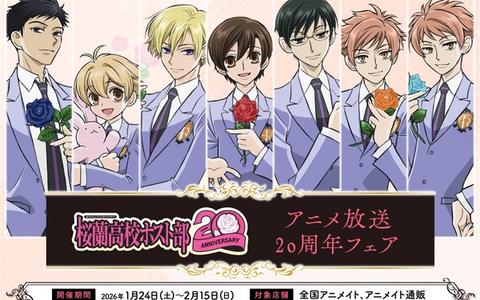
So here I am. The anime turns 20 this year. I'm still not over it. And I have things to say.
First, for the Uninitiated
Ouran High School Host Club is a manga by Bisco Hatori, serialized in Hakusensha's LaLa magazine from 2002 to 2010, spanning 18 volumes and over 13 million copies in circulation. It was adapted into a 26-episode anime in 2006 by Studio BONES — directed by Takuya Igarashi, with scripts by Yoji Enokido (of Revolutionary Girl Utena fame).
The premise sounds deceptively simple: Haruhi Fujioka, a scholarship student at the absurdly wealthy Ouran Academy, stumbles into the Third Music Room and accidentally smashes an 8 million yen vase belonging to the school's Host Club. To pay off the debt, Haruhi is drafted as a host. There's a catch: everyone assumes she's a boy.
The Genius of the Anime: Takuya Igarashi's Direction
Episode 1: “Starting Today, You Are a Host!”
This is one of only three episodes where Igarashi handled both storyboard and direction himself. The anime opens not with Haruhi, but with the noisy library itself — establishing the world before the protagonist. Then we follow Haruhi walking through the academy's corridors, speaking to her late mother in heaven.
Then comes the door. In the manga, Haruhi opens it and the Host Club is simply there. In the anime, she opens the door and rose petals burst outward. It's theatrical. It's ridiculous. It's perfect.
Throughout the episode, we see seemingly random cutaways to lightbulbs switching on. Then the final bulb clicks, the camera pulls back, and all the bulbs form the kanji 女 — “woman.” Each bulb represents one member's moment of realization, and the order reflects each character's perceptiveness. Kyoya's bulb? It was already on from the start.
Episode 13: “Haruhi in Wonderland!”
Sitting at the exact midpoint of the series, this anime-original story casts the Host Club as Wonderland characters — Tamaki as the Mad Hatter, Kyoya as the Caterpillar, the twins as Cheshire Cats. Underneath the playfulness, it's the only episode that truly excavates Haruhi's interior life.
“Don't be afraid to enjoy yourself, alright?”
Episode 21: “Until the Day It Becomes a Pumpkin!”
On the surface, a Halloween episode. Underneath, it poses the most important question of the entire series — through metaphor. A moonlit carriage racing through the night. Kaoru's voice: “That carriage will turn back into a pumpkin at midnight.”
What's the carriage? The Host Club itself. And the pumpkin? Reality. Graduation. Growing up. The episode weaves this metaphor through every scene without ever stating it outright.
What Makes a Masterpiece
✿ ✿ ✿
A masterpiece is a work where the characters keep living in your head after the story ends.
✿ ✿ ✿
I've thought a lot about why Ouran has stayed with me for twenty years. It comes down to a specific quality: the characters feel like real people who are still out there somewhere, living their lives.
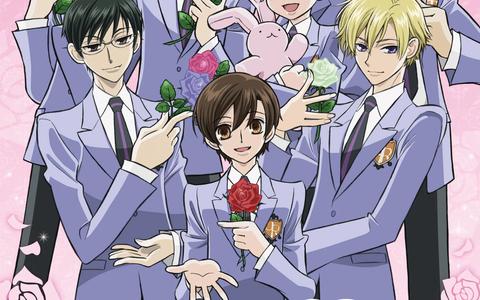
The Host Club members aren't archetypes. They start as archetypes — the princely type, the cool type, the little devil type — and Hatori systematically dismantles each one. Tamaki isn't just the flashy narcissist; he's the son of an illegitimate marriage, raised in France by a mother he was torn from, desperately performing happiness because genuine connection terrifies him.